

Ocean Enegineering / Ship
Due to long years of work in rivers and marine environments, many parts in mechanical equipment such as ships of drilling platforms and large ship cranes will be corroded and worn and need to be protected and repaired. For the preparation of wear and corrosion-resistant coatings on the surface of shaft parts, efficient surface processing technology is required; while some power equipment local wear and tears, such as iron chips and impurities in the lubricating oil system, the impact of low oil temperature or oil pressure during the start-up process of the unit, easy to cause the shaft tile and shaft diameter wear, the need for the local area of the melting and repair, suitable for the use of better flexibility of the robot automatic repair method. For the problems of wear and corrosion of marine machinery parts, laser cladding repair and remanufacturing technology can meet the application needs of the above situation at the same time and has been widely used in a variety of products such as marine diesel engines, marine gas turbines, steam turbines, propellers, and ship hulls.
EHLA
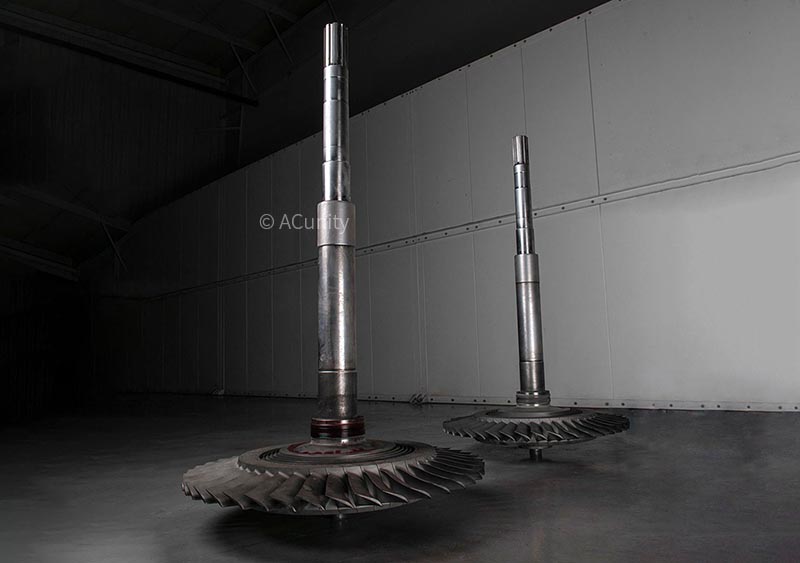
EHLA can efficiently prepare wear and corrosion-resistant coatings on the surface of different sizes of shaft parts such as offshore platform columns, turbine rotors, driveshafts, Etc. In addition, it can be used for the rapid cladding of large amounts and has unique advantages in the surface cladding of heat-sensitive materials or small size parts due to its low heat input and small deformation.
Inner Laser Cladding
To prepare wear-resistant hard coatings, scour-resistant or corrosion-resistant coatings on the inner surface of parts, rapid repair of local defects on the inner surface, and laser cladding repair of narrow and restricted locations.
Conventional Laser Cladding Repair
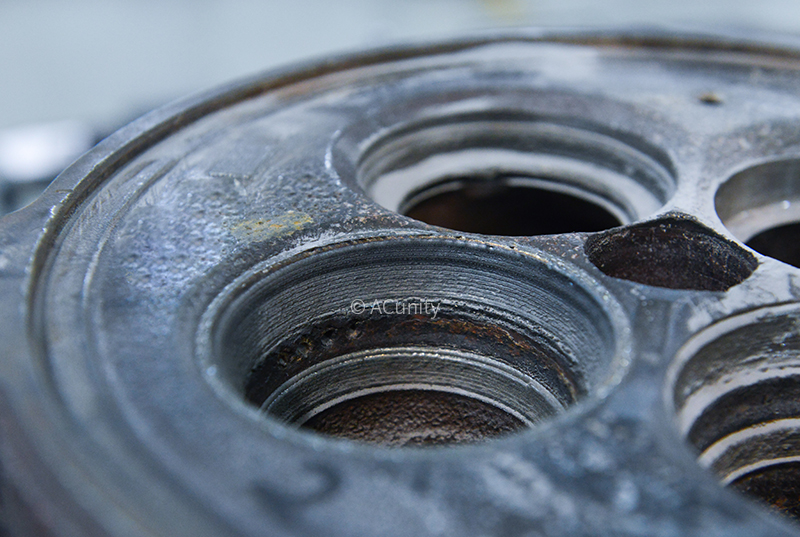
For the remanufacture of damaged parts or the manufacture of functional coatings on new parts. Laser cladding repair of corroded and worn cylinder heads, engine blades, and other components
EHLA for Repair of Drive Shafts
Driveshaft failure is generally in the form of damage, wear, and deformation, which can cause mechanical equipment failure and affect the regular operation of the equipment. Ultra-high-speed laser cladding technology can effectively solve these problems by achieving targeted cladding of local areas, improving the hardness and structural strength of the drive shaft bearing locations, and making the parts more durable. The thickness of the ultra-high-speed laser cladding layer is 0.05-1mm, and the cladding efficiency is generally 0.8-1.2m²/h, depending on the thickness, with low heat input and a dense, high bond strength coating. In addition, it can effectively reduce material consumption, reduce the amount of subsequent processing, and has irreplaceable application advantages in terms of cost, efficiency, and thermal impact on the part.